

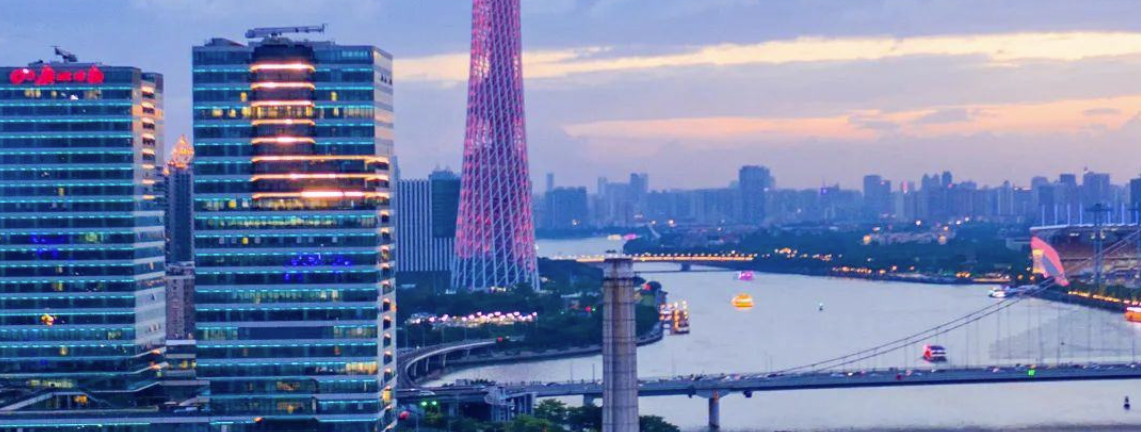

Ask any medical tourism insider where the next "Bangkok" is, and they will probably not say Singapore, Seoul, or Tokyo. They will say Guangzhou.
In February 2026, China's National Health Commission released figures that turned a quiet trend into a headline: 1.28 million international patient visits at key foreign-facing hospitals in 2025, up 73.6% from three years earlier. Patients from Europe and North America doubled. Guangzhou took the largest share.
This is not a one-off spike. Three structural forces are pulling medical tourists to Guangzhou. Here is the full picture.
1. The new Guangzhou International Medical Center
In May 2026, Guangzhou launched the Guangzhou International Medical Center (GIMC), a city-level coordinating body designed to make medical tourism seamless.
GIMC's mandate, as described by Wu Chen, its general manager, is to"create a product system that deeply integrates medical care, wellness and tourism." In practice, that means:
One-stop services for overseas patients: visa assistance, remote pre-consultation, multilingual translation, travel and accommodation, post-op follow-up
Partnerships with 17 pilot international medical service hospitals across the city
Standardised pricing and quality benchmarks for international departments
Direct coordination with airlines, hotels, and travel agencies
The 17 pilot hospitals include names you would recognise: Sun Yat-sen Memorial Hospital, Sun Yat-sen University Cancer Center, the First Affiliated Hospital of Guangzhou University of Chinese Medicine, Guangdong Provincial People's Hospital, Nanfang Hospital, and Guangzhou Medical University-affiliated hospitals.
2. The cost-quality ratio
Guangzhou is home to some of China's highest-density tertiary care. The city has more Class III Grade A (三甲) hospitals than any city outside Beijing and Shanghai, and several specialties — particularly TCM, oncology, ophthalmology, and orthopedics — are nationally ranked.
But pricing is closer to a developing-country tier than a developed-country tier.
The cost gap is structural: lower clinical labor costs, no insurance middleman markup, and government-subsidised hospital infrastructure. Quality is not.
3. The 30-day visa-free regime
Singapore, Malaysia, and 40+ other countries enjoy 30-day visa-free entry to China. For most planned medical procedures, 30 days is more than enough. This effectively makes Guangzhou a "fly in Friday, recover Sunday, fly home Monday" destination for short-stay specialties.
For longer treatments, a medical (M) visa is straightforward and well-supported by major hospitals.
What makes Guangzhou different from Bangkok or Seoul
Bangkok built its medical tourism industry on private hospitals catering to Middle Eastern and European patients. Seoul built it on cosmetic surgery. Guangzhou is doing something different: a public-hospital-first model, anchored by academic medical centers, with TCM and oncology as headline specialties.
That model has three advantages:
Clinical depth. Top public hospitals in Guangzhou handle hundreds of thousands of complex cases per year, with research ties to Sun Yat-sen University, Southern Medical University, and Guangzhou Medical University.
Transparent pricing. Public hospital international departments publish clear price lists. No surprise billing.
TCM integration. Unlike Bangkok or Seoul, Guangzhou offers seamless integration of Western medicine and Traditional Chinese Medicine under one roof. A breast cancer patient can get chemotherapy at Sun Yat-sen University Cancer Center and walk next door for TCM-supported recovery at the same hospital network.
What's still hard
Even with the new GIMC, planning a medical trip to Guangzhou from abroad is not frictionless:
Specialist matching is opaque. International patients usually do not know which doctor is best for their case.
Appointments are not always real-time. Top specialists book 1–3 weeks ahead.
Language and cultural navigation matter. Hospital systems, payment flows, and post-op instructions assume Chinese literacy.
Recovery accommodation is not standardised. After a procedure, you do not want to be in a tourist hotel.
This is exactly the gap expat.wiki was built to close. We provide bilingual companion service, pre-trip specialist matching, hospital appointment booking, and post-op recovery accommodation coordination for international patients coming to Guangzhou and the wider Greater Bay Area.
📌TIPS
For medical consultation and paid local escort services in mainland China, please contact us via email: expatcare@qq.com
Important reminder: This guide is for reference only. Please follow your doctor's advice for specific medical treatment.


评论