


In March 2026, an event in Beijing quietly reshaped the global medical tourism map. At the 2026 Zhongguancun World Digital Health Forum, China released the International AI Hospital Consortium Consensus — the first international agreement defining what an "AI hospital" actually is. On the same day, the world's first super AI hospital opened in Hainan's Boao Lecheng international medical tourism pilot zone.
This is not a tech demo. It is the start of a new infrastructure layer for international patients.
What "smart hospital" means in 2026
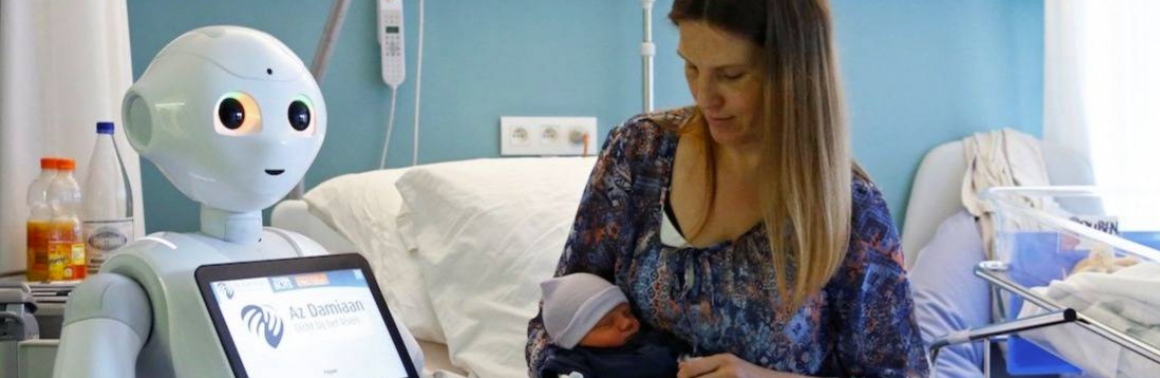
A smart hospital in China is not a hospital without doctors. It is a hospital where AI is deeply embedded in every step of the patient journey, from intake to discharge.
The major Chinese smart hospital solution, exemplified by Renji Hospital's Smart Hospital Integrated Solution V1.0 (launched globally in February 2026 at the Dubai World Health Expo), covers:
Smart operating rooms — AI-assisted surgery planning, real-time intra-operative guidance
Smart ICUs — continuous AI monitoring of vital signs, early warning of deterioration
Smart inpatient wards — voice-controlled room, automated nursing workflows, AI-driven medication reconciliation
Integrated internet hospital platform — pre-op and post-op care delivered remotely via app and video
For international patients, the internet hospital platform is the most relevant. It means a follow-up consultation with your Chinese surgeon can happen from your home in Singapore, London, or Dubai, with AI-assisted translation and clinical decision support running in the background.
The technology stack
Two technology trends are converging:
Frontier Chinese AI models in clinical use. DeepSeek-R1 can parse an 800-page medical record in seconds with 92% data usability. Qwen3-720B is being deployed for pharmacokinetic simulation, drug-interaction checking, and clinical-trial matching. These are not research projects; they are running in production in tertiary hospitals.
National reimbursement for AI diagnostics. As of 2026, China's National Healthcare Security Administration has 12 AI-assisted diagnostic categories in the Class B reimbursement list. This means hospitals are economically motivated to deploy AI, not just clinically motivated.
For patients, this translates into three practical benefits:
Faster diagnosis. Imaging, pathology, and lab interpretation that used to take days can be pre-screened by AI in minutes.
Fewer errors. AI acts as a second reader, catching things the human eye might miss.
Better continuity. A digital twin of your clinical record follows you across departments and even across hospitals.
What the Hainan "super AI hospital" actually does
The Boao Lecheng facility is built inside a special medical zone that allows the use of drugs and devices not yet approved in the rest of China. The AI hospital wraps this regulatory advantage with:
A digital twin of the entire hospital, used for workflow optimisation
AI-driven patient routing to the right specialist
Real-time translation across 20+ languages
Continuous AI monitoring of every inpatient, with predictive alerts to nursing staff
A dedicated AI international patient concierge that coordinates visa, travel, hospital, and post-op care
For medical tourists, the practical promise is shorter stays, fewer handoff errors, and remote follow-up that actually works.
How this changes the medical tourism experience
In the pre-AI era, the typical medical tourism patient journey had multiple friction points:
Pre-trip: Unclear pricing, slow specialist matching, opaque appointment availability
On-trip: Long waits, language barriers, manual coordination between departments
Post-trip: Difficulty getting follow-up, no continuity of records
The AI-driven hospital changes each of these:
Pre-trip: AI-assisted pre-consultation tools on hospital apps can give you a realistic cost and timeline estimate in minutes. Some Chinese hospitals already let international patients upload their medical records through a web portal and receive an AI-triaged specialist match within 24 hours.
On-trip: Smart hospital workflows cut average waiting time by 30-50%. Real-time multilingual translation apps work across all hospital interactions.
Post-trip: Internet hospital platforms with AI clinical summarisation make cross-border follow-up feasible.
The trade-offs
It is not all upside. There are real concerns:
Data privacy. Your medical record may be processed by AI systems with varying degrees of encryption and international data transfer compliance. Ask each hospital about their data policy.
Algorithmic transparency. AI diagnostic recommendations should support, not replace, the senior clinician's judgment. Avoid hospitals where you feel the doctor is rubber-stamping an AI suggestion.
Digital literacy. Older patients and those less comfortable with mobile apps may struggle with smart hospital workflows. Companion services that handle the digital logistics on the patient's behalf are valuable.
The "uncanny valley" risk. Pure-AI concierge services without a human fallback can be frustrating when something unexpected happens (a billing error, a clinical complication, an emotional need).
The best hospitals in 2026 are using AI to augment human care, not replace it. Look for that balance.
Where expat.wiki fits
We sit between you and the hospital. Our job is to:
Help you choose the right hospital for your case (we track which hospitals have the strongest AI and which are over-rotating on tech)
Coordinate pre-trip consultations and confirm pricing in writing
Provide bilingual human companions who can navigate the hospital's app and AI tools on your behalf
Coordinate post-trip follow-up via the hospital's internet hospital platform, with human check-ins
If you are evaluating a medical trip to China in 2026, the question is no longer whether Chinese hospitals are technically advanced — they are. The question is whether your specific case and your specific preferences are a good fit for a Chinese hospital's specific strengths.
📌TIPS
For medical consultation and paid local escort services in mainland China, please contact us via email: expatcare@qq.com
Important reminder: This guide is for reference only. Please follow your doctor's advice for specific medical treatment.

评论